
The Volkswagen XL1: A Glimpse into the Future of Hyper-Efficient Motoring, Ten Years On

For those of us who have spent a decade immersed in the automotive industry, the landscape of vehicle technology is a constantly shifting panorama. We’ve witnessed the meteoric rise of electrification, the relentless pursuit of aerodynamic efficiency, and the ongoing quest for unparalleled fuel economy. Yet, amidst this rapid evolution, some vehicles stand as stark reminders of pioneering spirit, bold engineering, and the sheer audacity of vision. The Volkswagen XL1, a hyper-rare anomaly that promised a staggering 313 miles per gallon, is one such machine. Even now, years after its limited production run, it continues to fascinate and provoke thought about the true potential of automotive design.
Rediscovering the XL1: A Design Born of Necessity and Innovation
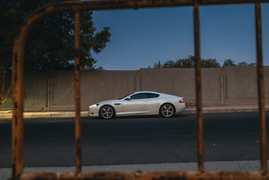
Imagine, if you will, a vehicle that seems to have materialized from a science fiction novel, parked serenely on a quiet suburban street. This is the immediate impression one gets from encountering a Volkswagen XL1. With its unique, upward-swinging butterfly doors revealing a meticulously crafted, two-seat cockpit where occupants sit in a tandem arrangement, it’s a car that instantly commands attention and sparks conversation. It’s not just the aesthetic that turns heads; it’s the palpable sense of advanced engineering that radiates from its very form.
This isn’t merely an exercise in futuristic styling. The XL1 is a testament to the relentless pursuit of automotive efficiency, a philosophy deeply ingrained in German engineering. Its exterior, sculpted with an almost obsessive attention to aerodynamic detail, boasts a drag coefficient of a mere 0.186. To put that into perspective, this figure is an astonishing 2.5 times lower than that of a contemporary Volkswagen Golf. This reduction in aerodynamic drag is paramount for a vehicle prioritizing extreme fuel economy, allowing it to slice through the air with minimal resistance.
Beneath this otherworldly skin lies a powertrain that embodies the spirit of hypermiling. A compact, two-cylinder diesel engine producing a modest 46 horsepower is artfully integrated with an electric motor generating an additional 26 horsepower. This plug-in hybrid setup, however, is not a conventional range-extender. Instead, it represents a sophisticated synergy of internal combustion and electric propulsion, capable of operating independently or in tandem to optimize performance and efficiency. The entire package weighs in at an incredibly light 795 kilograms, a feat achieved through extensive use of carbon fiber composites – a material choice that underscores the XL1’s commitment to weight reduction.
The Genesis of a Vision: Piëch’s Pursuit of the 1.0-Liter Car
The story of the Volkswagen XL1 is inextricably linked to the ambitious vision of the late Ferdinand Piëch, a titan of the automotive world and former chairman of Volkswagen. His long-held dream was to create a production car capable of achieving what he termed the “1.0-liter car” status – that is, a vehicle that could travel 100 kilometers on just one liter of fuel. This translates to an astounding efficiency figure of approximately 235 miles per gallon (US). The XL1 was the culmination of a decade-long development project, initiated in the early 2000s, dedicated to exploring and integrating cutting-edge fuel-saving and emissions-reduction technologies.
However, the XL1’s journey from concept to reality was fraught with complexities. Its eventual production in 2013 coincided with the burgeoning Dieselgate scandal, a period when Volkswagen was exposed for its deliberate use of “defeat devices” to cheat on emissions tests. This unfortunate timing cast a shadow over the XL1’s achievements. On one hand, Volkswagen was showcasing a diesel vehicle capable of achieving unprecedented fuel economy; on the other, the company was embroiled in an emissions cheating scandal. The juxtaposition was undeniably awkward and detracted from the genuine technological advancements embodied by the XL1.
Unpacking the Engineering: A Symphony of Efficiency
For industry professionals and enthusiasts alike, the engineering brilliance of the XL1 is its most compelling attribute. As David Power, an owner and founder of Powerflex, a manufacturer of high-performance suspension components, articulates, “It’s not a range-extender.” This distinction is crucial. The XL1’s powertrain operates with a nuanced autonomy. The rear-mounted diesel engine and electric motor can function independently, allowing the car to operate in pure electric vehicle (EV) mode when sufficient charge is available, or to combine their power for brisk acceleration.

The claimed 313 mpg figure is achieved under specific driving cycles that heavily utilize the battery. On longer journeys, where the diesel engine plays a more dominant role, Power reports experiencing figures around 150 mpg. This highlights the vehicle’s adaptability and its ability to optimize efficiency based on driving conditions. Furthermore, the absence of power steering, a common feature in most modern vehicles, is a deliberate design choice that contributes to the overall reduction of parasitic drag and energy consumption. Despite this, Power emphasizes that the XL1 is “lovely to drive and can accelerate quite briskly.” This isn’t a car that compromises on the driving experience in its quest for efficiency. The chassis is described as “stiff but the car rides well,” with “suspension that has good travel and control,” indicative of a well-engineered and balanced platform.
The tires themselves are remarkably narrow, even thinner than those found on a Citroën 2CV, a car renowned for its minimalist design and fuel efficiency in its era. This choice further minimizes rolling resistance, a key factor in achieving such extraordinary mpg figures.
Exclusivity and Ownership: A Realm of the Elite
The Volkswagen XL1 was never intended for mass production. Volkswagen manufactured only 250 units globally, all of which were left-hand drive. Of this limited run, a mere 200 were allocated for retail sale, with just 30 designated for the UK market. This inherent rarity, coupled with the cutting-edge technology and bespoke manufacturing processes, contributed to a stratospheric launch price of approximately £100,000 (around $120,000 USD at the time).
Acquiring an XL1 today is an endeavor for the dedicated collector or the discerning enthusiast. David Power acquired his 2016-registered model six months prior to the article’s original publication for a significant sum – £80,000. Even at this reduced price point, it remains a substantial investment, reflecting its unique status in automotive history. The fact that his particular XL1 had accumulated a mere 6,000 miles speaks volumes about its pampered existence.
Ownership of such an exclusive vehicle comes with its own set of challenges. The specialized nature of the XL1 means that routine servicing is not a task for the local independent mechanic. Instead, vehicles must be returned to Volkswagen UK for maintenance, a process that involves collection and return of the car. This specialized servicing, while ensuring expert care, comes at a considerable cost. Power notes that his last service alone amounted to £1700, a stark reminder that owning a piece of automotive history often entails significant financial commitment.
The XL1’s Legacy: A Proof of Concept and a Beacon of Inspiration
Despite the operational costs and the challenges of ownership, the Volkswagen XL1 is unequivocally a keeper for David Power. He contrasts it with his other classic car, a Citroën SM, which, while beautiful, he wouldn’t feel comfortable taking on extended journeys. The XL1, on the other hand, offers the potential for long-distance travel with an unparalleled degree of fuel efficiency. This duality – a collector’s item that is also a capable, albeit specialized, touring machine – is a defining characteristic of the XL1.
The original article posited the XL1 as a “proof of concept rather than an early look at the future.” While some of its more radical design elements may not have directly translated into mainstream automotive production, the underlying principles it championed have profoundly influenced the industry. The relentless pursuit of aerodynamic efficiency, the sophisticated integration of hybrid powertrains, and the innovative use of lightweight materials are all trends that have become central to the automotive landscape of 2025 and beyond.
The XL1 stands as a potent symbol of what is achievable when engineering boundaries are pushed with unwavering resolve. It demonstrated that incredible fuel economy was not an insurmountable hurdle, but rather a solvable equation rooted in meticulous design and innovative technology. While the economics of mass production may have prevented the XL1 from becoming a common sight on our roads, its spirit lives on. The insights gained from its development and the sheer audacity of its execution continue to inspire engineers and designers striving to create a more sustainable and efficient automotive future.
For those captivated by the groundbreaking engineering of the Volkswagen XL1 and the future of hyper-efficient vehicles, exploring the latest advancements in plug-in hybrid technology and lightweight automotive construction is a rewarding next step. Understanding the innovations that stem from such pioneering projects can offer valuable insights into the direction of sustainable transportation.