
Navigating the Automotive Abyss: A Decade of Experiencing Utter Automotive Disappointment
As an automotive industry veteran with a decade immersed in the ebb and flow of vehicle development and consumer reception, I’ve had the unique, and often unsettling, privilege of witnessing the entire spectrum of automotive engineering. From the groundbreaking innovations that redefine our perception of mobility to the bewildering missteps that leave one questioning the very sanity of their creators, my career has spanned it all. Today, I want to delve into a specific, rather grim, corner of this vast landscape: the vehicles that, despite reaching production and finding their way into the hands of unsuspecting buyers, fundamentally failed to deliver on even the most basic tenets of automotive competence. These aren’t just cars with minor flaws; these are vehicles that represent significant misjudgments, often scoring a dismal 3 out of 10 or lower in critical evaluations. Examining these “rubbish cars” offers a stark, yet invaluable, lesson in what not to do in automotive design and engineering.
The automotive industry is a hyper-competitive arena where innovation, reliability, and driver engagement are paramount. Consumers, armed with more information than ever before, rightfully demand vehicles that offer a compelling blend of functionality, performance, and value. Yet, history is littered with examples of vehicles that seemed to have missed the memo entirely. My experience has shown that while some manufacturers strive for perfection, others, for reasons often unclear, produce vehicles that are truly bad. These are the automobiles that, in the grand tapestry of automotive history, represent cautionary tales, prompting us to consider the very essence of what makes a car good.
The concept of a “low-scoring car” isn’t merely a subjective opinion; it’s often the culmination of rigorous testing and evaluation across multiple disciplines. From the visceral experience of driving to the critical metrics of mechanical reliability and safety, these vehicles consistently fall short. When we talk about bad cars to buy, we’re referring to models that elicit widespread disappointment and, in many cases, regret from their owners. These unreliable cars often become the punchline of automotive jokes, embodying everything a driver hopes to avoid when making a significant purchase.
The Haval Jolion Pro: A Glimpse into Early Automotive Misfortune
Let’s begin with the Haval Jolion Pro, a vehicle that, from its very inception, struggled to ignite confidence. My initial encounter with this particular model was, to put it mildly, disheartening. The test car, within the first sixty seconds of operation, required external assistance – a glaring red flag that foretold a profoundly troubled experience. When the vehicle eventually sputtered to life, the drivetrain revealed itself as one of the most unrefined and lethargic systems encountered. The cacophony it produced was matched only by its glacial acceleration. The ride quality was, to use a blunt term, woeful, offering occupants little respite from the unevenness of the road. Complementing this was handling that could charitably be described as chaotic. The chassis, meant to be the very foundation of the vehicle’s dynamic behavior, felt as inert as a forgotten relic in a desolate landscape. This experience cemented the Jolion Pro’s place in the annals of poorly designed cars.
The Skywell BE11: A Testament to Automotive Apathy
Moving on to the Skywell BE11, we encounter another stark example of automotive misadventure. My professional assessment of the BE11 was unequivocal: it was simply not a pleasant vehicle to drive. In fact, the driving experience was so fundamentally flawed that I would strongly advise against it, urging prospective buyers towards virtually any other mode of transportation. This includes, and I don’t say this lightly, unconventional and discomforting options. The BE11 represented a significant departure from what constitutes acceptable automotive engineering, leaving a lasting impression of an opportunity spectacularly missed. Such vehicles serve as potent reminders of the importance of core driving dynamics in creating a successful new car model.

The Mitsubishi Shogun Sport: A Promise Unfulfilled
The Mitsubishi Shogun Sport, while perhaps aiming for a more robust and adventurous persona, ultimately stumbled in its execution. The rough and lethargic engine, coupled with a languid gearbox, contributed to a wobbly ride and handling that felt vague and imprecise. The steering exhibited a disconcerting elasticity, making precise maneuvers a challenge. Mitsubishi’s marketing, however, promised a vehicle equally adept in urban environments as it was in the wilderness. This, I can attest, was a bold claim that failed to materialize. My professional opinion is that this statement was, to put it diplomatically, utter nonsense. Such disconnects between marketing promises and product reality highlight the importance of rigorous product testing and honest communication in the automotive market.
The Seat Altea XL: Navigating Compromises
The Seat Altea XL, while perhaps not reaching the nadir of some of its contemporaries, still presented its own set of compromises. The inherent physics of building a taller and longer vehicle often lead to a softening of its handling characteristics. Indeed, the Altea XL lacked the agility of its Leon stablemate. However, it wasn’t a complete detraction from the driving experience, provided one could tolerate a degree of body roll. This model serves as a reminder that even within a reputable manufacturer’s lineup, there can be vehicles that prioritize practicality over dynamic prowess, leading to a less engaging driving experience for the enthusiast. For those seeking a reliable used car, understanding these trade-offs is crucial.
The Mitsubishi Mirage: A Lesson in Basic Competence
The Mitsubishi Mirage stands as a particularly egregious example of a car failing at its most fundamental tasks. The steering was characterized by a slow and vague response, making it difficult to discern the vehicle’s intended direction. The car exhibited extensive body roll, severely compromising its cornering ability. Grip levels were remarkably low, contributing to a precarious sense of security. Every minor imperfection on the road was transmitted directly to the occupants, creating a jarring and uncomfortable ride. Furthermore, the noise intrusion was inexcusable, making for a tiresome journey. The sheer amount of slack in the steering system meant that it was often impossible to tell which way the wheels were pointing. This level of deficiency is something you hope never to encounter in car reviews.
The Mitsubishi Shogun: A Thirsty Legacy
The Mitsubishi Shogun, in its iteration that garnered such low scores, was notoriously thirsty. To paint a vivid picture, it consumed fuel with an insatiable appetite. While its residual values weren’t catastrophically bad, the depreciation of this vehicle was, in a dark humor analogy, less rapid than that of the Titanic on its final voyage. This highlights how fuel efficiency remains a critical factor for consumers, even in more rugged vehicle segments. When considering a luxury SUV, fuel economy is often a secondary concern, but for a vehicle like the Shogun, it became a significant detractor.
The Nissan Pulsar: A Case of Unremarkable Mediocrity
The Nissan Pulsar, in its evaluated form, was a perfectly capable family hatchback. However, its defining characteristic was its complete lack of distinction. It brought absolutely nothing new or innovative to a fiercely competitive segment. My lingering question was simply: “Why, Nissan?” This represents a missed opportunity for Nissan to truly innovate and differentiate itself. In the dynamic electric vehicle market, such uninspired offerings are quickly left behind.
The Suzuki Grand Vitara: Compromised Handling for Off-Road Prowess
The Suzuki Grand Vitara positioned itself as a more serious off-roader than many of its rivals. However, this specialization came at a significant cost to its on-road manners. The handling was notably poor, characterized by overly light and vague steering that offered little feedback. The vehicle was easily unsettled by bumps and road imperfections. The three-door version, in particular, suffered from a severe lack of rear seat space, a terrible ride quality, and excessive noise levels. This illustrates the delicate balance manufacturers must strike between different performance attributes. Buyers looking for SUVs with good gas mileage might find the Grand Vitara a challenging proposition.
The Kia Sedona: An Automatic Transmission Misstep
The Kia Sedona’s standard six-speed manual gearbox was, by all accounts, the preferred option. The automatic transmission, however, with the same number of gears, proved to be a fussy and indecisive unit. It shifted gears with the deliberation of a toddler faced with an overwhelming array of toys, lacking the smooth and decisive operation expected in a modern vehicle. This highlights the critical importance of refined powertrain integration, especially in the automotive technology sphere.
The Proton Savvy: A Stark Reminder of Competitors’ Strengths
The Proton Savvy was, in a word, truly awful. Yet, paradoxically, we found ourselves grateful for its existence. It served as a powerful, albeit unpleasant, reminder of just how good every other small car on the market was. My professional recommendation was, and remains, to seek out any alternative. The claimed top speed of 99 mph was largely irrelevant, as reaching it would require either nerves of steel or an industrial quantity of sedatives, not to mention a significant degree of deafness to drown out the mechanical din. This is the kind of vehicle that makes one reconsider the value of seemingly mundane commuter cars. For those seeking cheap cars for sale, it’s crucial to look beyond just the sticker price and investigate reliability and performance.
The Proton Gen-2: Desirability as a Dealbreaker
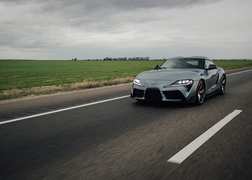
The Proton Gen-2, while offering a respectable circa-40 mpg and falling into a lower insurance bracket, making it a relatively inexpensive car to run, possessed a fundamental flaw: a complete lack of desirability. This absence of appeal directly translated into a resale value that was a significant financial kick in the teeth for owners. This serves as a crucial lesson in the importance of brand perception and the emotional connection consumers develop with their vehicles, particularly relevant in the context of car financing options.
The Suzuki Alto: Urban Purity Corrupted
It’s important to remember that the Suzuki Alto was intended as a basic, urban runabout, not a high-performance hot hatch. However, even with this context, its performance was still disappointing. The sloppy steering, excessive body roll, and a tendency to crash over potholes significantly detracted from its intended purpose. These are not minor quibbles; they represent a failure to achieve even the most basic levels of competence for its intended use case. For those in the market for used city cars, thorough inspection is paramount.
The Proton Satria Neo: A Misguided Youthful Appeal
The Proton Satria Neo, despite possessing a decent chassis, partly due to Lotus’s engineering input, was fundamentally flawed in its execution. A cramped interior, an unappealing badge, and a frankly ridiculous name made it a non-starter for the youth market it was ostensibly aimed at. This demonstrates how critical consumer psychology and brand identity are, especially when targeting specific demographics. When considering new car deals, understanding the target audience is key.
The Perodua Myvi: A Compelling Argument for Inaction
The Perodua Myvi, in its evaluated iteration, presented a compelling argument for never learning to drive at all. For concerned fathers contemplating a vehicle for their teenage offspring, this model served as a potent cautionary tale. The lack of driver engagement and the overall feeling of inadequacy made it a vehicle that inspired apprehension rather than confidence. This is the kind of automotive offering that can sour a new driver’s entire perception of driving. When discussing family car safety, a lack of control and predictable handling can be major concerns.
The MG TF LE500: A Question of Value and Logic
The MG TF LE500 presented a particularly egregious example of questionable value proposition. Priced at a substantial £16,500, while a previous generation TF could be acquired for a mere £4,000, it begged the question: “Do they think we’re stupid?” This highlights the critical importance of market perception and offering a product that justifies its price point through genuine innovation or significant improvement. In the competitive sports car segment, such miscalculations are rarely forgiven. For those interested in affordable sports cars, discerning value is essential.
The Suzuki Jimny Mk3: A Tiny Town Car with a Big Problem
The Suzuki Jimny Mk3 did possess one advantage as a town car: its diminutive size and boxy proportions made it exceptionally easy to park. This was fortunate, as the overwhelming desire for occupants was to cease the journey and disembark as quickly as possible. The driving experience was so profoundly unpleasant that parking became less a matter of convenience and more a desperate act of escape. This is an extreme example of how a vehicle’s core function can be undermined by a terrible user experience. For buyers considering compact SUVs, the Jimny Mk3 serves as a stark warning.
The SsangYong Rodius: A Frightful Family Flop
Finally, we arrive at the SsangYong Rodius, a vehicle that was, in many respects, fantastically practical. However, this practicality was rendered utterly moot by its appearance. The design was so utterly alien and, frankly, frightening, that the primary reaction of children was to flee in terror, rendering the car’s intended purpose of transporting them impossible. This serves as a hyperbolic, yet effective, illustration of how aesthetics, or the complete lack thereof, can be an insurmountable barrier to a vehicle’s success. When discussing minivan alternatives, a visually offensive design is a deal-breaker.
Learning from the Automotive Lowlights
My decade in the automotive industry has provided me with a unique vantage point, allowing me to witness both the triumphs and the spectacular failures. The vehicles discussed here, despite their low scores and inherent flaws, offer invaluable lessons. They underscore the fundamental principles of good automotive design: robust engineering, engaging driving dynamics, reliable performance, and honest value. For consumers, these examples serve as powerful reminders to conduct thorough research, prioritize essential features, and be wary of vehicles that fail to deliver on basic expectations.
As the automotive landscape continues to evolve at an unprecedented pace, with advancements in electric propulsion, autonomous technology, and sustainable materials, the importance of core automotive competence remains paramount. The dream of owning a new car, whether it’s a cutting-edge EV or a reliable family sedan, should be one of excitement and satisfaction, not one of dread and regret.

If you’re in the market for a new vehicle and want to ensure you’re making a wise investment, don’t hesitate to leverage the expertise of industry professionals. Consulting with trusted automotive advisors or delving into comprehensive, unbiased reviews can save you from the pitfalls of buying a bad car to buy. Let your next automotive acquisition be a testament to informed decision-making and a gateway to years of driving pleasure, not a cautionary tale of what to avoid.