
The Genesis of Automotive Revolution: Cars That Forged the Future
For over a century, the automobile has been far more than mere transportation; it’s a dynamic canvas upon which human ingenuity has painted a continuous masterpiece of innovation. As an industry veteran with a decade immersed in the ever-evolving landscape of automotive technology, I’ve witnessed firsthand the transformative power of a single groundbreaking idea implemented in a production vehicle. These aren’t just cars; they are the pivotal moments, the “Eureka!” instances that have fundamentally reshaped how we drive, experience, and interact with our vehicles. This exploration delves into the pioneering machines that introduced revolutionary technologies, forever altering the trajectory of automotive development. We’ll be focusing on the vehicles that didn’t just participate in the automotive evolution, but actively drove it.
The automotive industry thrives on incremental progress, but the true leaps forward are almost always traceable to a specific production car that dared to be different. Think about the sheer complexity and sophistication of a modern vehicle. It’s a symphony of thousands of individual advancements, each contributing to the seamless and often intuitive experience we enjoy today. From the rudimentary horseless carriages of the late 19th century to the hyper-connected, semi-autonomous marvels of the 21st, every step has been a testament to human ambition and engineering prowess. This article revisits some of the most impactful of these vehicular milestones, highlighting the cars that first brought critical, world-changing technologies to the masses. We’ll uncover the stories behind the first V8 engine in a production car, the advent of the electronic parking brake, the integration of climate control, and even the humble yet indispensable fuel filler cap indicator. Our journey is curated to focus on innovations with lasting significance, shedding light on their profound impact.
To assess the true weight of these automotive forefathers, we’ve employed a “groundbreaker score” out of 10. This metric isn’t about the car’s sales figures or critical reception; rather, it quantifies the long-term, ripple effect of its technological contribution. A higher score signifies a more profound and enduring influence on the industry and consumer expectations. Some of these vehicles, while revolutionary, may have been commercially ahead of their time, facing initial hurdles to widespread adoption. Yet, their pioneering spirit ignited a chain reaction, setting benchmarks that would eventually become industry standards, making driving safer, more comfortable, and more engaging. Join us as we embark on this compelling retrospective, a testament to the visionaries who shaped the modern automotive experience.
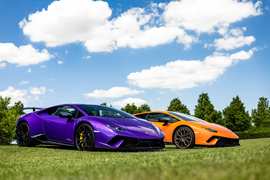
The Roar of the V8: Power Redefined
The quest for more power and smoother operation has always been a driving force in automotive engineering. While inline-four and inline-six engines dominated early automotive design, the inherent balance and potential for increased displacement made the V8 configuration a tantalizing prospect. The Cadillac Model D, introduced in 1914, stands as the first American production car to feature a V8 engine. This was no small feat. The V8, with its two banks of four cylinders arranged in a “V” shape, offered a significant reduction in vibrations compared to earlier engine designs, leading to a smoother, more refined driving experience. Furthermore, its design allowed for greater displacement within a relatively compact engine bay, paving the way for more powerful vehicles.
The impact of the V8 cannot be overstated. It quickly became synonymous with American automotive prowess, underpinning everything from luxury sedans to muscle cars. The Cadillac Model D’s adoption of this engine configuration wasn’t just an engineering novelty; it was a strategic move that signaled a new era of performance and refinement. The smoother operation meant less fatigue for drivers on longer journeys, and the increased power output opened up new possibilities for vehicle design and capability. This particular groundbreaker earns a solid 9/10 for its enduring influence on engine design and performance expectations across the globe, particularly within the American automotive psyche. The allure of the V8, with its distinctive rumble and substantial torque, continues to captivate enthusiasts and shape the performance landscape, even as alternative powertrains gain traction.
Precision and Convenience: The Dawn of the Electronic Parking Brake
In an era where mechanical levers and cables were the norm, the introduction of an electronic parking brake felt like a glimpse into the future. The Audi A6 (C5 generation), specifically the 2000 model year, was among the first production vehicles to integrate an electronic parking brake (EPB). This system replaced the traditional handbrake lever with a button or switch, utilizing an electric motor to apply the brakes. The benefits were immediate and significant: a cleaner interior design free from a cumbersome handbrake lever, enhanced convenience, and improved safety features like hill-hold assist, which automatically prevents the vehicle from rolling backward on inclines.
The EPB’s integration represented a crucial step towards greater vehicle automation and user-friendliness. It streamlined the interior architecture, allowing designers more freedom in cabin layout and contributing to a more minimalist aesthetic that has become increasingly popular. Beyond aesthetics, the sophisticated control offered by the EPB allows for more precise application and release, contributing to a safer and more predictable braking experience. This innovation, while perhaps not as overtly dramatic as a V8 engine, has become an indispensable feature in modern vehicles. Its impact on driver convenience and interior design earns the Audi A6’s pioneering EPB system a strong 8.5/10. The widespread adoption of electronic parking brakes across virtually all vehicle segments is a testament to its success and the consumer demand for such advanced, user-centric features.
Comfort Beyond Measure: Air Conditioning Becomes Standard
The concept of in-car climate control has evolved dramatically, but its origins lie in the pursuit of making driving more comfortable, especially in warmer climates. While early attempts at in-car cooling existed, the 1969 Oldsmobile Toronado is widely credited with being the first American production car to offer factory-installed, fully integrated air conditioning as a standard feature across its entire model line. Prior to this, air conditioning was often an expensive, dealer-installed option, and frequently clunky and unreliable. The Toronado’s system, however, was designed from the ground up as part of the vehicle’s engineering, offering a more robust and effective solution.
This move by Oldsmobile was a bold statement, prioritizing passenger comfort as a fundamental aspect of the driving experience. The widespread availability of effective air conditioning revolutionized long-distance travel and made driving in hot weather a significantly more pleasant affair. It transformed the automobile from a utilitarian machine into a mobile sanctuary, a space where occupants could control their environment. The impact on driver and passenger well-being, and its subsequent establishment as a near-universal expectation in vehicles worldwide, grants this innovation a remarkable 9.5/10. Today, a car without effective air conditioning, especially in many markets, is practically unimaginable.
The Subtle Genius: The Fuel Filler Cap Indicator
It might seem like a minor detail, but the small arrow next to the fuel gauge, indicating which side the fuel filler cap is on, has saved countless drivers from awkward maneuvers at the gas station. While the precise origin of this feature can be debated, with some attributing its widespread adoption to European manufacturers, the Volkswagen Golf Mk1, introduced in 1974, is a strong contender for popularizing this simple yet ingenious design cue in a mass-produced vehicle. This humble indicator solved a common point of confusion and minor frustration for drivers, particularly those who drove multiple vehicles or infrequently visited gas stations.
The brilliance of this innovation lies in its simplicity and its effectiveness in addressing a universal driver need. It’s a perfect example of user-centered design, where a small detail significantly enhances the overall ownership experience. For a feature that provides such a consistent and practical benefit with minimal cost or complexity, its impact is surprisingly far-reaching. This seemingly insignificant arrow has become an expected element in virtually every car dashboard, a silent testament to its utility. For its elegant solution to a common problem and its near-universal adoption, this subtle but brilliant innovation garners a 7.5/10. It highlights that sometimes, the most profound advancements are the ones that simply make life a little bit easier.
Beyond the Obvious: Advanced Safety and Driver Assistance

The evolution of automotive safety has been a relentless march, driven by a desire to protect occupants from the inherent risks of driving. While airbags and anti-lock braking systems (ABS) have become standard, other pioneering systems have quietly emerged, profoundly enhancing driver awareness and accident prevention.
The Mercedes-Benz S-Class (W220 generation), particularly in its later iterations around the early 2000s, was a significant proving ground for early driver-assistance systems that hinted at the autonomous future. Technologies like Adaptive Cruise Control (ACC) and Pre-Safe® system, which detects an impending collision and prepares the vehicle’s safety systems (like pretensioning seatbelts and closing windows), were significantly advanced and refined in this model. While not the absolute first to ever feature such rudimentary elements, the S-Class was instrumental in making these sophisticated systems more reliable, integrated, and ultimately, accessible to a broader luxury market, influencing their eventual mass adoption.
ACC, for instance, allows the vehicle to maintain a set speed and distance from the vehicle ahead, reducing driver fatigue in highway driving and improving traffic flow. Pre-Safe® takes a proactive approach, anticipating potential accidents and taking corrective measures before impact. These systems, born from meticulous research and development, represent a paradigm shift from passive safety (protecting occupants during a crash) to active safety (preventing crashes altogether). The impact of these early integrated ADAS (Advanced Driver-Assistance Systems) on reducing accidents and improving overall road safety is immense. The S-Class’s role in refining and demonstrating the viability of these systems earns this technological leap a significant 9/10. The ongoing development of ADAS, heavily influenced by the foundational work on vehicles like the W220 S-Class, continues to redefine automotive safety and pave the way for semi-autonomous and autonomous driving capabilities.
The Revolution on Wheels: Electric Vehicles Lead the Charge
While the concept of electric propulsion has existed for over a century, its resurgence and modern application have been nothing short of revolutionary. The Tesla Roadster, launched in 2008, stands as a pivotal moment in the rebirth of the electric vehicle (EV). It wasn’t just another electric car; it was a high-performance sports car that proved EVs could be desirable, exhilarating, and capable of impressive range, effectively shattering the perception of EVs as slow, limited, and utilitarian.
The Roadster’s success demonstrated that electric powertrains could deliver not only environmental benefits but also a compelling driving experience that could rival, and even surpass, internal combustion engine (ICE) vehicles. This laid the groundwork for Tesla’s subsequent models, like the Model S, which further solidified the appeal and practicality of electric sedans. The Roadster ignited the imagination of consumers and investors, compelling traditional automakers to accelerate their own EV development programs. The ripple effect of the Tesla Roadster’s existence is profound, accelerating the global shift towards electrification and fundamentally reshaping the automotive industry’s future. For its role in catalyzing the modern EV revolution and proving the viability of high-performance electric vehicles, the Tesla Roadster earns an undeniable 10/10. The current surge in EV adoption, from mainstream sedans to powerful SUVs and trucks, owes an immense debt to this groundbreaking machine.
Connectivity and the Digital Cockpit: A New Era of Interaction
The integration of digital technology into the automotive interior has transformed the cabin into an intelligent hub. While early infotainment systems were rudimentary, the BMW iDrive system, first introduced in the 2001 BMW 7 Series (E65), represented a bold and somewhat controversial, but ultimately influential, attempt to centralize vehicle controls through a single interface. The system utilized a central dial controller and an LCD screen to manage navigation, climate control, audio, and other vehicle functions.
Despite initial criticism regarding its complexity, iDrive was a visionary step towards the digital cockpits we see today. It pioneered the concept of a unified command center, reducing dashboard clutter and offering a more integrated approach to managing a growing array of vehicle features. The subsequent evolution of iDrive, and indeed many competitor systems, has refined this concept, leading to intuitive touchscreens, voice command integration, and seamless smartphone connectivity. The foundational principles of iDrive – centralizing control and enhancing user interaction through a digital interface – have become standard in modern automotive design, influencing everything from premium luxury vehicles to entry-level compact cars. Its role in ushering in the era of the connected car and the digital cockpit garners a high 8.5/10. The sophisticated infotainment systems and driver-centric digital displays of 2025 vehicles are direct descendants of this pioneering effort.
The Future is Now: Continuous Innovation and the Road Ahead
The cars we’ve examined are more than just historical footnotes; they are the architects of the modern automotive landscape. Each innovation, whether a powerful engine, a sophisticated safety system, or a subtle convenience feature, has contributed to the ever-improving experience of driving. The automotive industry is a testament to relentless progress, a constant striving for better, safer, and more efficient mobility solutions.
As we look towards 2025 and beyond, the pace of innovation shows no signs of slowing. We are witnessing the maturation of electric vehicle technology, the widespread adoption of advanced driver-assistance systems that blur the lines between human and automated driving, and the increasing integration of AI and connectivity into the very fabric of our vehicles. The next generation of groundbreaking cars will undoubtedly continue to push boundaries, perhaps introducing fully autonomous driving capabilities, revolutionary battery technologies, or entirely new forms of personal mobility.
The journey of the automobile is an ongoing narrative of human ingenuity. The vehicles that dared to be first, that introduced the technologies we now take for granted, deserve our recognition and appreciation. They remind us that progress is built upon bold ideas and the courage to bring them to life.
Ready to experience the future of driving? Explore the latest advancements in automotive technology and discover vehicles that are defining the next era of mobility. Contact your local dealership or visit our website today to schedule a test drive and witness firsthand the innovations that are shaping our roads.